


Your gifts gratefully received


Your
holiday feast cooked to perfection


That every child's gift brings giant smiles

And may you be eternally grateful for all your blessings.
From all of us at ASAP


 |
| Pat Bannon will cycle the toughest mountains of the French Alps for ASAP! |


 |
Education for Girls Benefits Society |
 |
Students in Zimbabwe inspire ASAP's 1st annual Circle Our World With Love campaign |

 According the IRIN, almost 40 percent of the global population is under 24; over one billion people - one in five people - are aged 15-24; in one third of the world’s countries, more than 60 percent of the population is under 30; and 85 percent of the world’s youth live in the developing world.

 The Zimbabwe Schools Examinations Council has released a report on 2011 secondary school examination performances showing urban schools fell far behind rural schools1 Ordinary and Advanced Level examinations. Nyanga High School, in Manicaland Province, came out on top! Manicaland is the province where ASAP has been working to help improve education since 1995, and the report indicates schools here performed very well overall. To read more click here.Pat Bannon, of Leeds England will take a 5-day cycle challenge this September for ASAP Africa.

 What better day than Valentine's Day to say thanks again to all our donors. With your help, as we work together, our labor of love continues to empower women and their families in Zimbabwe.
 With the warm rains falling in Zimbabwe, highly contagious diseases are increasing. This week a typhoid outbreak has been reported near the capital, Harare. At least 90 people were admitted to hospital and over 600 affected.To learn more about the signs and symptoms of this disease click here.

 The 200 year old Msasa tree came down on the same day that President Robert Mugabe planted a tree to launch the country's national tree planting and reforestation campaign. Dubbed the "Hanging tree", icons of the first uprising against white settlers, including the ancestral grandmother of the nation Mbuya Nehanda, were said to have been hanged from the tree in 1898. Some believe this to be an omen that the tree represented "powerful forces" and this may signal the dawn of a new era. To read more click here.
 Today, World AIDS Day, is an opportunity for people to unite in the fight against HIV/AIDS, to remember those who have died of the disease and to celebrate accomplishments. Despite worldwide efforts, 33.3 million people are living with the disease today.
 In the USA, on Thursday we stop to reflect and give thanks for all our blessings great and small. At ASAP we are grateful to you because you make our work possible. Thank you for your continued support! We wish you a safe and happy festive season.
 "Poverty, abuse and cultural practices are preventing a third of Zimbabwean girls from attending primary school and 67 percent from attending secondary school, denying them a basic education, according to a recent study which found alarming dropout rates for girls." To read more click here.
 As part of her personal belief system, Hema shares:"I believe that volunteering is essential to humanity, when we volunteer with love and compassion we strengthen our inner spiritual core and it brings out the best in us. We not only develop an understanding of our fellow human beings but of ourselves too. I believe that charitable organizations can and do more to improve the lives of the most disadvantaged people in our world than even governments."
 There are two approaches to evaluating the impact of our social investments. “Metric-heads” believe that quantitative measures are the only conclusive method while “Story Huggers” know that figures and facts can never tell the whole story.
 With the upcoming presidential election next year, Zimbabwe is once again a country in crisis. For an extensive and up-to-date website containing news, views and links related to ZIMBABWE Click here.
Greetings contributors, readers, and all of those involved with ASAP Africa!
My name is Jimmy and I will be interning here for the next couple of years as part of my work for the Emory University MDP program, so I would like to take this opportunity to come out of the shadows and say hi.
Hi!
Although I don't know much about Zimbabwe, I am very eager to learn and excited to be a part of all the wonderful work being done by ASAP. Look to the blog regularly for updates about our programs and events as well as news from the field.
Enjoy!
Jimmy
 Welcome to James Ramsey, who will be working with ASAP through the Master's in Development Practice (MDP) Program at Emory University. The MDP program combines hands-on learning and field experience with rigorous training in a broad range of academic disciplines with a goal of achieving sustainable development in the face of global poverty, political and ethnic conflict, a degrading natural resource base, and irreversible climate change. To read more about this program at Emory click here.
 ASAP is proud to announce a new three year grant from the Flora Family Foundation to support the Improving Math Education in Primary School (IMEPS) project in Zimbabwe. Sixty one schools are involved in this project to improve math skills in the eastern district of Manicaland. To read more about this project click here.
 There are 15,000 vacant teaching posts in Zimbabwe. Despite reports that thousands of Zimbabwean teachers, who had left the country at the height of the economic crisis are returning, this number appears to be increasing. To read more click here.
 ASAP Africa in Zimbabwe is excited about a new partnership with Teachers Without Borders. TWB will be linking math teachers to ASAP's Improving Math in Primary School Project. If you are a math teacher, (or know of one) that would like to share skills and knowledge with teachers in rural Zimbabwe, click here to learn more about this volunteer opportunity.
 A new $600,000,000 ethanol plant will bring much needed development to Manicaland province. To be located in Chisumbanje, South of ASAP's base in Mutare, the plan has many people questioning the non-monetary, human costs. To read more click here.
 Last week ASAP Africa and Plan International celebrated the success of their three year Village Savings & Lending project partnership in Zimbabwe. At a field day near Mutare, 100s gathered to learn more about this phenomenally successful project that helps families gain self-reliance. Click here to learn more.

 Attending this unique Home & Garden event will support ASAP and features one-of-a-kind found,re-purposed and artistic items,FREE sustainable-living workshops and more… If you are near Newport Beach CA this week-end, don't miss the opportunity to attend!
 ASAP Zimbabwe's Country Director in Zimbabwe is proud to share learning from ASAP's Out of School Adolescents Project partnership with Catholic Relief Services. At the invitation of CRS, Regai shared his team's success stories of empowering girls with organizations from around the world during the launch of the publication, "My Skills, My Money, My Brighter Future in Zimbabwe" at the National Press Club in Washington, D.C. last week. Click here to read the report.
 ASAP Africa is proud to announce a new three year partnership with Plan International that will see the expansion of ASAP's work with Village Savings and Lending (VS&L) nation-wide in Zimbabwe. Since 2001, when The McKnight Foundation funded ASAP's first VS&L project, ASAP has helped over 30,000 families improve their household income and increase their self-reliance through this rural micro-finance project. To learn more about VS&L click here.


 This depiction of What Makes a Good School was created in rural Zimbabwe. As part of the UNICEFSocial Awareness Campaign for Primary Schools project, ASAP Africa is proud to be included in a consortium of over 20 local organizations working together to answer this question.
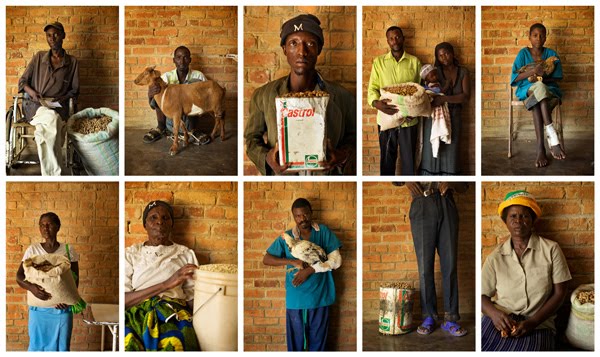 Not long ago, Zimbabwe was the breadbasket of Africa. Recently, the United Nations found Zimbabweans to be among the world’s poorest people, often making mere survival an all-consuming task.
 by Victor Katchika-Jere
 A team of four software development students, Charles Chen, Charles Naut, Derek Czajka and Sophia Westwood, from Stanford University will be making improvements on ASAP's website as part of the annual Stanford Hackathon this week-end. The talents of these students will help launch ASAP's new Light the Way campaign, making web site additions and improvements for 24 hours. To read more about the other Hackathon projects click here.
 The map above shows the prevalence of malnutrition in Zimbabwe in 2003. ASAP Africa works in the Eastern Nyanga and Chimanimani region, both areas on concern during the 2011 "lean season" between now and March. According to the FEWSNET - The Famine Early Warning System and Network - acute malnutrition may also be a problem. The fact that these historically very productive agriculture regions are now at-risk is a grave concern. To read more click here.


